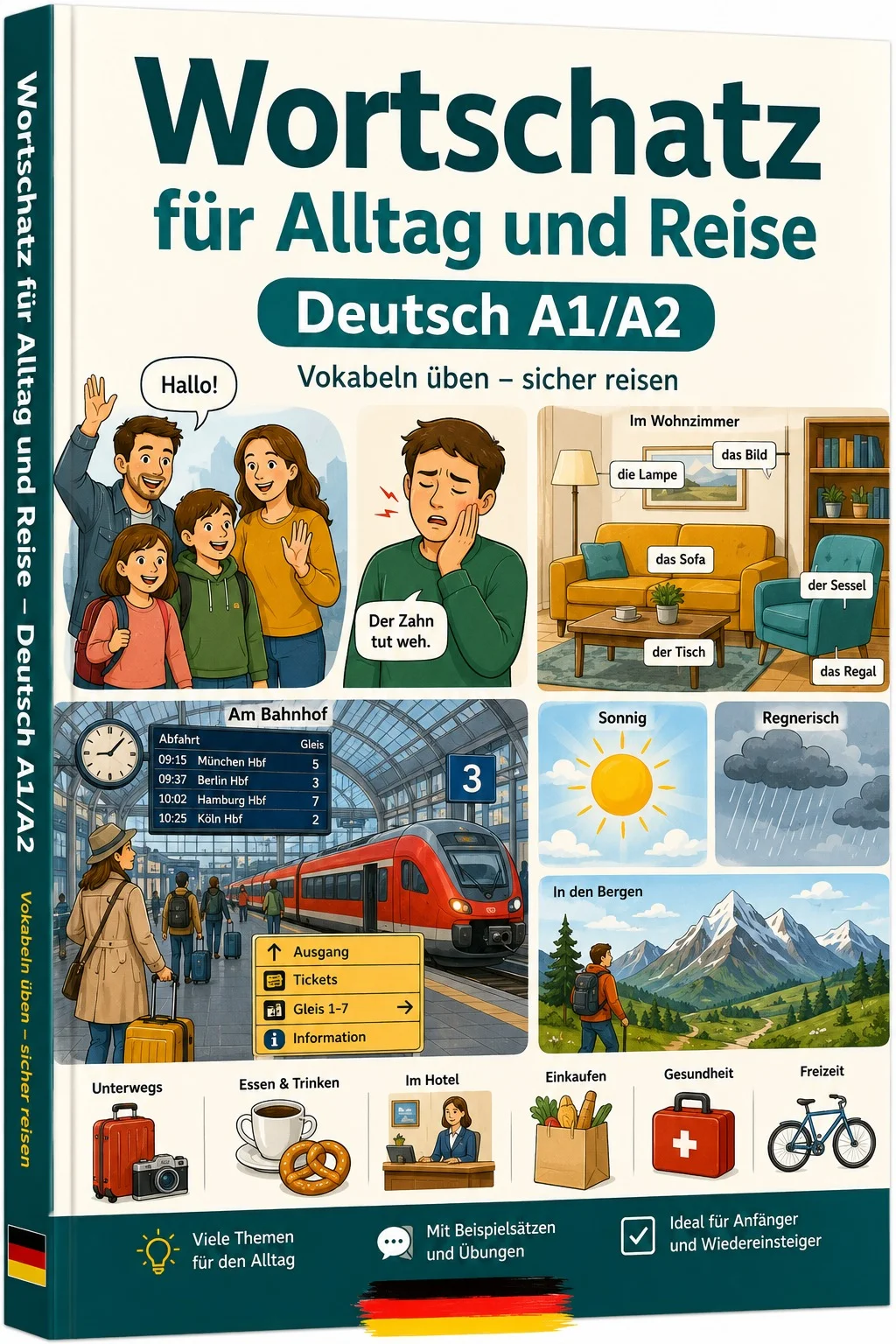
Wortschatz für Alltag und Reise – Deutsch A1/A2: Essential Words You Need
Are you learning German at the beginner level? Then mastering Wortschatz für Alltag und Reise – Deutsch A1/A2 is your first big step toward real communication. This vocabulary set covers the words and phrases you actually use every day: ordering coffee, asking for directions, booking a hotel room, or talking about your family. In this guide, we will explore the most useful topics inside Wortschatz für Alltag und Reise – Deutsch A1/A2 and show you how to learn them fast.
Why Focus on Everyday and Travel Vocabulary?
Many textbooks teach random words that you never use. But Wortschatz für Alltag und Reise – Deutsch A1/A2 focuses on practical situations. Imagine you are at a German train station. You need to say: “Wo ist der Bahnsteig?” (Where is the platform?) or “Eine Fahrkarte nach Berlin, bitte.” (A ticket to Berlin, please.) These are not difficult words – but they are essential. By learning Wortschatz für Alltag und Reise – Deutsch A1/A2, you build the confidence to speak from day one.
Key Topics You Will Learn
A solid Wortschatz für Alltag und Reise – Deutsch A1/A2 typically includes these categories:
- Food and Drink – der Kaffee, das Brot, die Rechnung (the bill)
- Transport – der Bus, der Zug, der Flughafen, die Haltestelle
- Accommodation – das Hotel, das Zimmer, der Schlüssel (key)
- Shopping – der Preis, der Euro, die Größe (size)
- Emergencies – Hilfe (help), die Polizei, der Arzt
Each category comes with simple example sentences. For instance: “Ich möchte ein Zimmer für zwei Nächte.” (I would like a room for two nights.)
How to Practice This Vocabulary Effectively
Do not just memorize lists. Instead, use active recall and context. Here is a three-step method for mastering Wortschatz für Alltag und Reise – Deutsch A1/A2:
- Step 1: Listen and repeat – Use free apps like Anki or Quizlet with audio.
- Step 2: Write short dialogues – Create a fake conversation at a café or train station.
- Step 3: Speak out loud – Practice saying phrases to yourself or with a partner.
Also, label items in your home with sticky notes. Write “der Tisch” on your table, “der Stuhl” on your chair. This connects Wortschatz für Alltag und Reise – Deutsch A1/A2 to real objects.
Final Tips for Success
Learn ten new words each day. Review yesterday’s words before adding new ones. Use the vocabulary in real situations – even if you just talk to yourself. And remember: Wortschatz für Alltag und Reise – Deutsch A1/A2 is not about perfection. It is about being understood. Start today with the topic “food” or “transport,” and in one month, you will handle basic trips to German-speaking countries with ease. Gute Reise und viel Erfolg!